



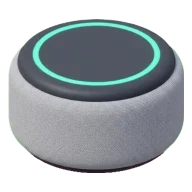

The hardest moment to log food is right after you eat it. Your hands are busy, the plate is in the sink, the phone is in another room. So the entry waits until evening — and by evening half the day is guesswork. A smart speaker in the kitchen removes that moment altogether: you say what you ate, and it is in your diary.
What you can say
foodoo works with Amazon Alexa. Three things, kept simple:
- Food — “Alexa, tell foodoo diary I had oatmeal with banana and a coffee.” Any dish, in your own words, with or without amounts.
- Water — “a glass of water”, “half a litre of water”. It goes to your water count for the day.
- The day so far — “Alexa, ask foodoo diary how many calories I had today.”
The speaker answers at once — “adding it to your diary” — and the analysis runs afterwards, the same one that reads your photos and typed meals: calories, protein, fat, carbs, fibre and the rest. A minute later the dish is on your phone, with its picture, where you can correct a portion if needed.
How to set it up
- Say “Alexa, enable foodoo diary”, or find “foodoo diary” among the skills in the Alexa app.
- When the Alexa app asks you to link an account, sign in with your foodoo account.
- That is all. Linking is confirmed in the foodoo app or on foodoo.fit, the same way as for the Telegram bot, the terminal or the TV — and it can be switched off any time in Profile → Devices and apps.
Alexa can log and tell you the day, nothing more: it cannot read your history aloud to anyone in the room, change your goals or buy anything. Its access works only for the skill.
Why voice helps a food diary
People forget and underestimate what they eat — most of all snacks, drinks and the small things eaten standing up. Logging soon after eating is one of the simplest ways to make a diary more accurate, and the less effort a log takes, the longer people keep a diary at all. A sentence said while you put the kettle on is about as little effort as it gets.
It also suits moments when a phone is the last thing you want to pick up: cooking with messy hands, feeding a child, a quiet evening. A photo is still the better choice for a full plate — a picture shows portions that words leave out — but for a quick yoghurt, an apple or a glass of water, saying it is faster.
Tips for good results
- Name the amount when you know it: “two eggs”, “a big bowl”, “250 grams of cottage cheese”.
- Say the whole meal in one sentence — it is logged together, as one meal.
- Mention how it was cooked when it matters: fried or boiled, with butter or without.
- Check the dish in the app once in a while and fix the portion — two taps.