








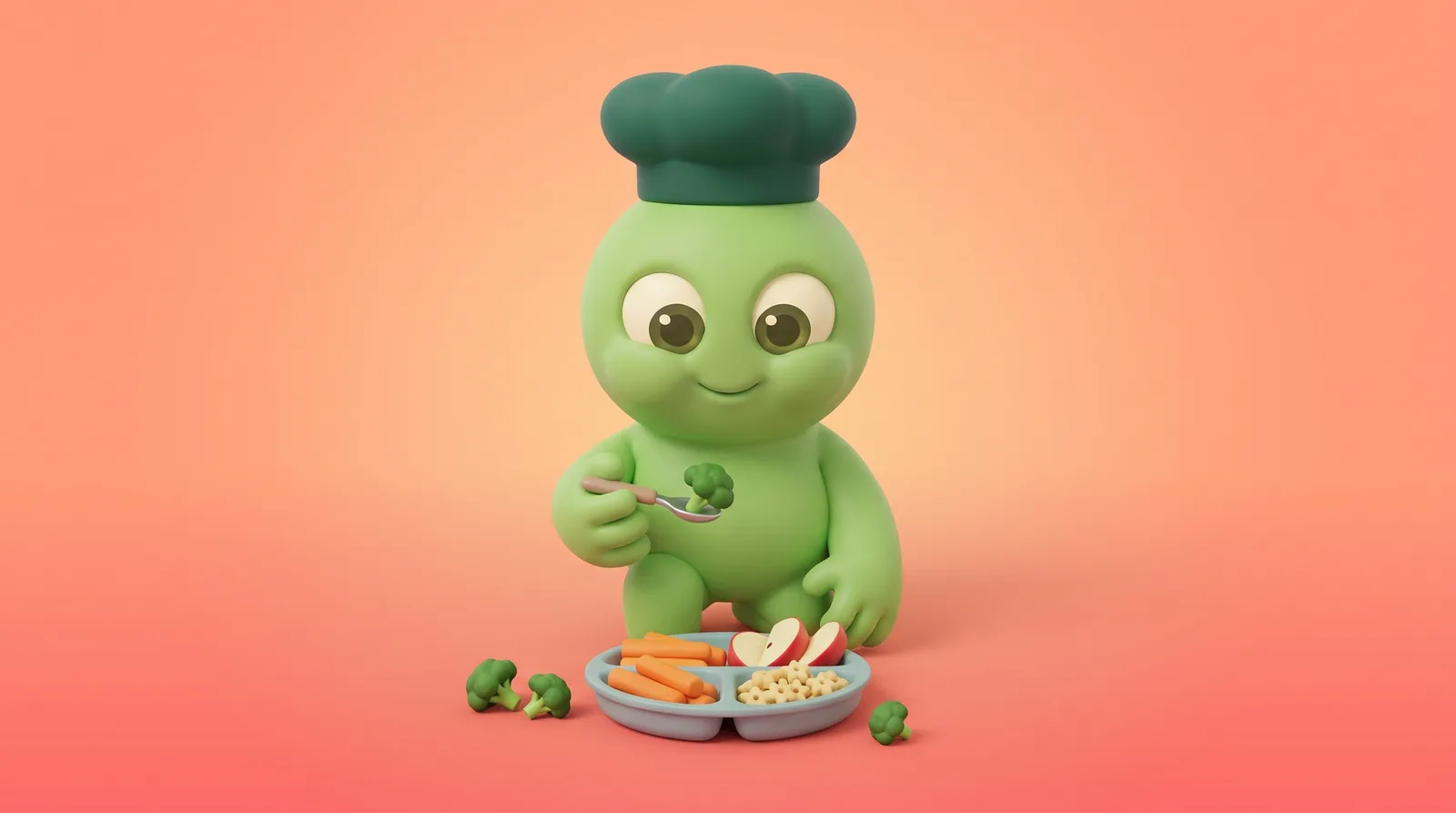
You cooked broccoli, cut it into little trees, put it next to the pasta he loves — and he pushed the plate away without a single bite. If this sounds familiar, you are in very good company. Turning down new food is one of the most ordinary things a small child does, and it is far more temporary than it feels at the dinner table.
Why children say no to new food
Wariness of unfamiliar food has a name — food neophobia — and it tends to rise once a child starts walking and peaks somewhere between two and six. One explanation researchers often give is simple: a toddler who can reach things on their own is safer if they distrust anything they have never eaten. Bitter tastes, which many vegetables have, are the easiest to refuse. None of this says anything about how you cook or how you parent.
The magic number is not one
What changes a child's mind is familiarity. In classic studies, toddlers came to prefer foods simply because they had been offered them more often; later trials found that a small taste of a disliked vegetable every day for a week or two made children like it more and eat more of it. Across this research, many children need somewhere around 8 to 15 tastes before a new food feels normal.
“Taste” is the important word. Looking at it, touching it, licking it and spitting it out all count as steps. A rejected piece of broccoli on Tuesday is not a failure — it is taste number three.
What helps
- Tiny amounts, next to something familiar. One floret beside the pasta, not a plate of broccoli.
- Offer again after a few days' rest. Not every meal; regularly.
- Eat it yourself. Children copy the people they eat with — parents, siblings, grandparents.
- Let them explore. Washing, sorting by colour or helping to stir all build familiarity without a single bite.
What backfires
Pressure. In one study, children who were told to finish their soup ate less of it and said more negative things about it than when nobody insisted. Bribes work the same way in reverse: “eat your vegetables and you'll get dessert” teaches that vegetables are the price and dessert the prize. A calm “you don't have to eat it” keeps the next taste possible.
The goal of a meal with a new food is not an empty plate. It is one more meeting with that food.
When several people feed the same child
Counting tastes is easy for one parent and almost impossible for a family. Breakfast is at home, lunch with a nanny, Saturday with grandparents — and nobody knows that the broccoli was already tried twice this week. Allergens add another layer: for little ones, many paediatricians now discuss introducing common allergens early and keeping them in the diet, and it helps to know what was given and when.
How foodoo helps
foodoo has a child's food diary kept together by everyone who feeds them: parents and carers join by a link, and whoever gives a meal logs it — by saying what was on the plate or snapping it. A meal is just the foods, how much was eaten and how it went.
foodoo counts the tastes of each new food and tells you when one is worth offering again after a few days' rest. It shows the week's plant colours and food groups as something to notice and play with. For children under three it keeps a record of which allergens were introduced and when — a record to talk over with your paediatrician, never advice. There are no calories, grams or “good” and “bad” foods anywhere in it, and nothing a child can fail at. One child is free.
Sources
- Birch LL, Marlin DW. I don't like it; I never tried it: effects of exposure on two-year-old children's food preferences. Appetite, 1982.
- Wardle J et al. Increasing children's acceptance of vegetables; a randomized trial of parent-led exposure. Appetite, 2003.
- Galloway AT et al. “Finish your soup”: counterproductive effects of pressuring children to eat. Appetite, 2006.
- Du Toit G et al. Randomized trial of peanut consumption in infants at risk for peanut allergy. New England Journal of Medicine, 2015.