








“What do you want for dinner?” — “I don’t mind, what do you want?” Most households have this exchange several times a week, and it rarely ends with anyone feeling inspired. The problem is not a lack of food. It is that an open question asked at the end of a long day is the hardest kind to answer.
Why the question is so hard
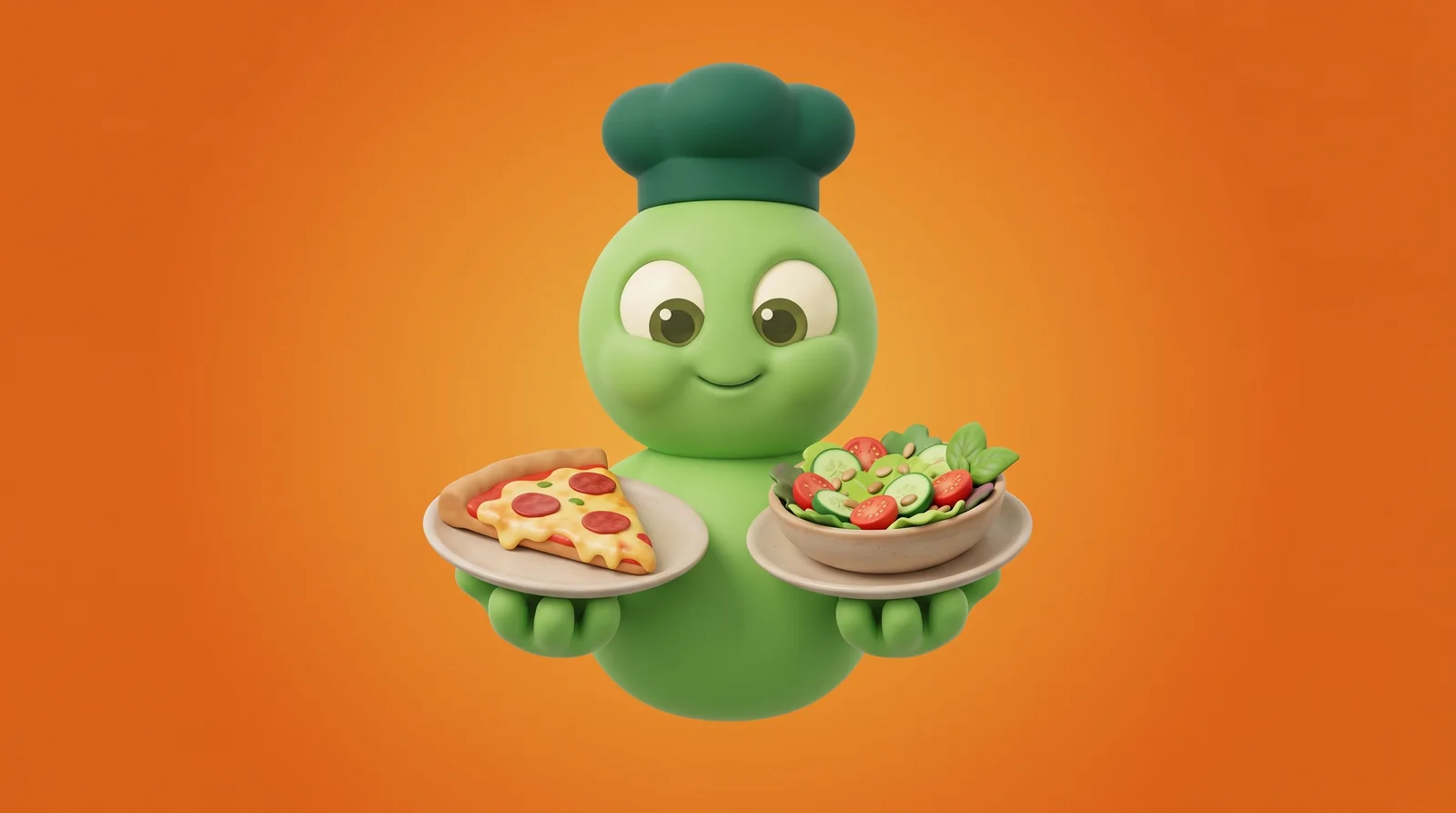
Dinner is a decision made late, hungry, and usually for more than one person. Each of those makes it harder. An open question (“what shall we eat?”) asks everyone to invent an answer from nothing; a short list (“pasta, the leftover soup, or shall we order?”) only asks them to choose. Choosing is easy. Inventing, at seven in the evening, is not.
There is also a quiet social cost. Whoever names a dish becomes responsible for it — for whether the others like it, and often for cooking it. So people hold back, and the question goes round the table again.
Five ways to end the debate
- Ask with options, not with a blank. Three concrete choices get an answer in seconds. Two is too few to feel like a choice, six is too many to compare.
- Start from what you already like. The best options are rarely new recipes. They are the dishes your household loved and has not had for a few weeks — familiar enough to be safe, absent long enough to feel like a treat.
- Decide earlier. The same question asked at lunchtime is a pleasant one. Asked at the fridge door, it is a chore.
- Let everyone vote, quietly. A vote removes the “I chose, so it is my fault” problem. Nobody has to argue for their option; the table decides.
- Turn the answer into a list at once. A decision without ingredients is only half made. One shared shopping list, which anyone can add to and tick off, saves the second conversation — and the second carton of milk.
Why eating together is worth the effort
Shared meals are one of the more consistent findings in research on eating habits. Families who eat together regularly tend to have children who eat more fruit and vegetables, and adults who eat with others more often report feeling closer to the people around them. These are associations, not guarantees — but they point the same way: the table matters, and what is on it matters a little less than the fact that people sat down at it.
The goal is not the perfect dinner. It is a dinner that was decided without anyone sighing.
How foodoo helps
foodoo has chats for the people you eat with — a family, a couple, flatmates. In a chat you can ask “What shall we eat?” as a poll. The options are offered from your own food: dishes you loved and have not had for a while, your starred ones, and what you usually eat at this hour. Add your own, send, and everyone votes with a tap.
Next to it lives a shared shopping list: anyone in the chat adds to it and ticks things off in the shop. And if somebody cooked something good, they can show the dish — the others add it to their own diary in one tap. Nobody sees anyone’s diary, calories or goals: only what was sent.
Sources
- Hammons AJ, Fiese BH. Is frequency of shared family meals related to the nutritional health of children and adolescents? Pediatrics, 2011.
- Dunbar RIM. Breaking bread: the functions of social eating. Adaptive Human Behavior and Physiology, 2017.