


Habit apps have borrowed from games for years: streaks, badges, levels — and virtual pets. The pet is the most emotionally powerful of these, which is exactly why it deserves a careful look. Done well, a companion makes a daily habit warmer. Done badly, it turns your phone into something that makes you feel guilty about lunch.
Why a companion works at all
A food diary is a solitary thing. You write something down and nothing happens. A companion changes the feedback loop: something reacts, immediately, in a voice you recognise. Reviews of gamification in health apps find that elements like this generally help people keep going — most reliably in the short term, and most reliably when they feel like play rather than pressure.
The second reason is quieter. People take better care of something outside themselves than of an abstract goal. “Log your lunch” is a chore; “show the cat what you had” is not quite the same request.
Where pet mechanics go wrong
The classic design is the Tamagotchi: neglect it and it suffers. It is effective, and for food it is the wrong tool. A pet that goes hungry when you do not log, gets sick when you eat cake, or looks sad at your snack teaches one lesson: food is something to feel bad about.
That lesson has costs. In a study that followed people over time, those who associated chocolate cake with guilt rather than celebration were no more set on eating healthily — and reported feeling less in control of their eating. Guilt is a poor fuel for habits. It makes people stop looking, not start changing.
What a guilt-free companion looks like
- Food never harms it. No hunger, no illness, no disappointment. It reacts to what you ate with curiosity, not a verdict.
- Nothing is lost when you stop. Skip a week and it is simply glad to see you. No decay, no broken streak to mourn.
- It invites, it does not assign. “Something juicy that grew on a tree, please” is a wish. “You are 12 g short on fiber” is homework.
- Nothing is for sale. What it gains comes from time spent together and from what you tried, not from a shop.
- You can turn it off. A companion you cannot dismiss is not a companion.
A good companion makes you want to open the app. A bad one makes you afraid to.
How foodoo does it
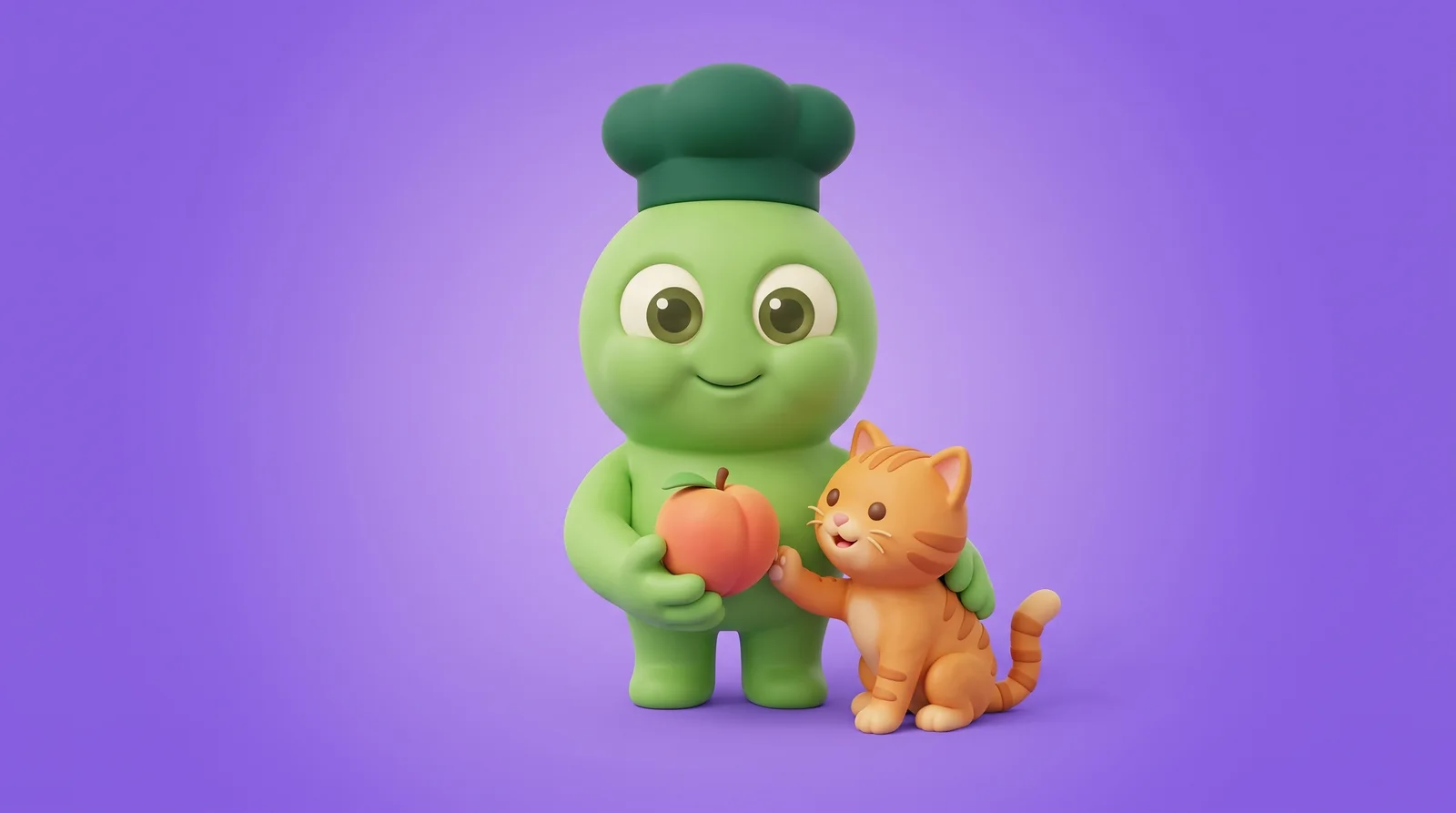
In foodoo you can have a pet of your own, drawn by AI from a description or from a photo of your real animal. It eats what you log and comments on it in its own voice, sometimes as a spoken voice message. Once a day it makes a wish — the daily advice, turned into something it would like to try — and thanks you if you grant it.
The rule it is built on is fixed: food never harms the pet. It has no hunger, no illness and no guilt to give you. Its only need is water, mild and undone by a single glass — and only if you track water at all. It has a home whose things arrive with the days you spend together and the cuisines you try; nothing is bought. Once a week it writes a diary page about your week — without a single number about nutrition. And if you prefer the classic coach, you can switch back any time; the pet will wait.
Sources
- Johnson D et al. Gamification for health and wellbeing: a systematic review of the literature. Internet Interventions, 2016.
- Kuijer RG, Boyce JA. Chocolate cake. Guilt or celebration? Associations with healthy eating attitudes, perceived behavioural control, intentions and weight-loss. Appetite, 2014.